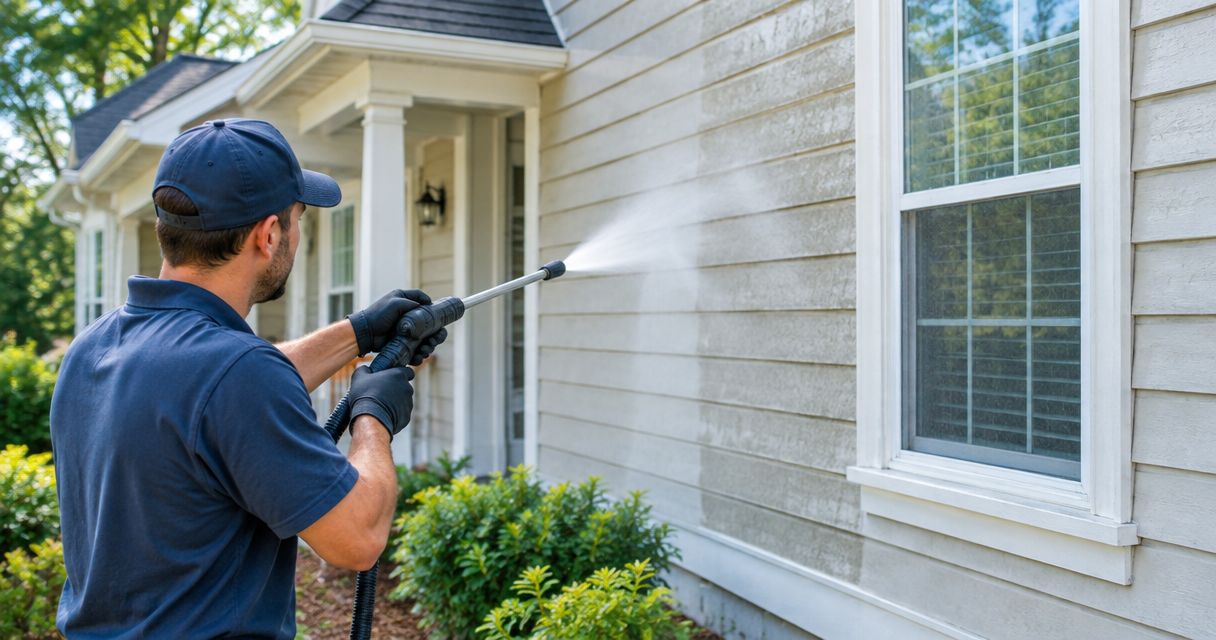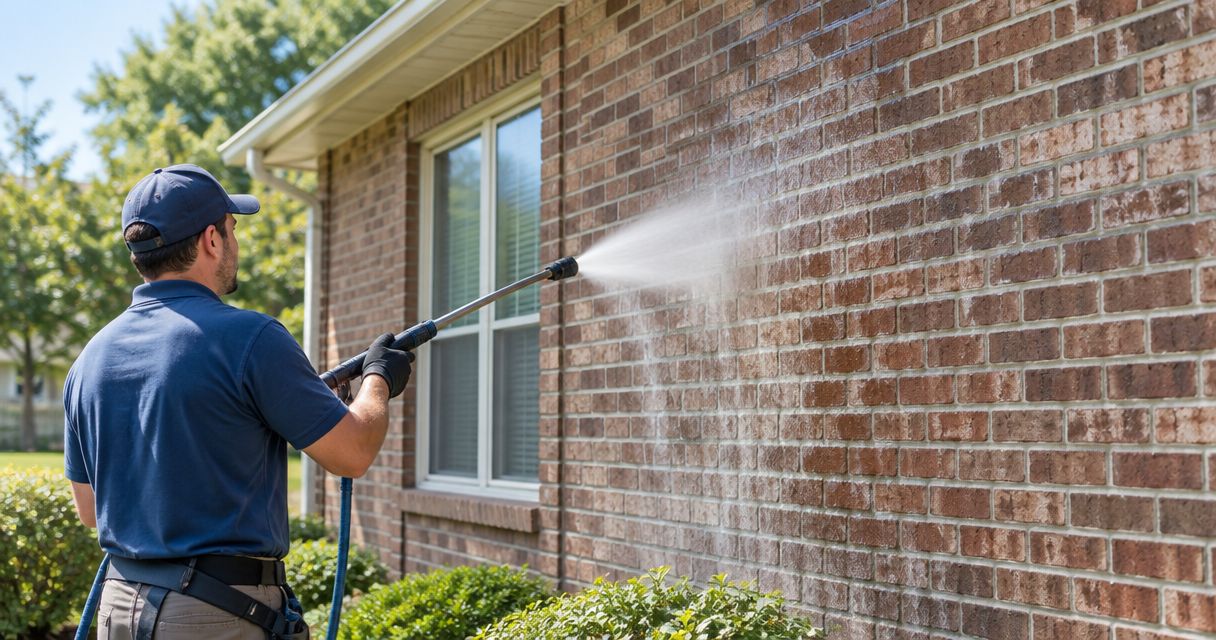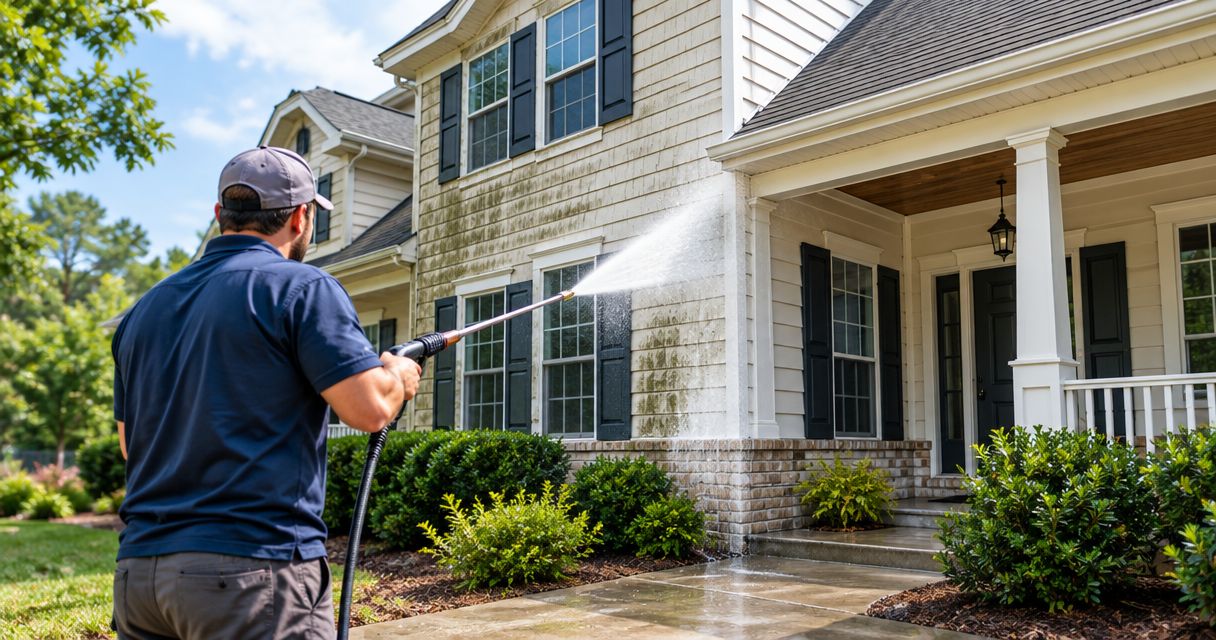
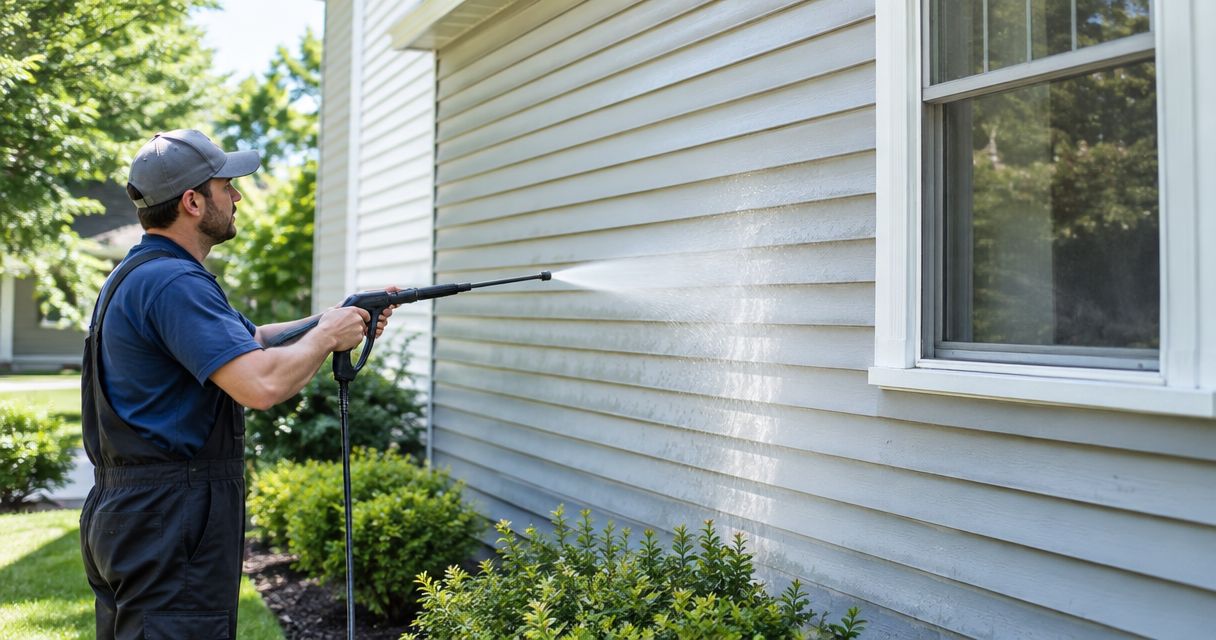
Best overall: soft-brush hand washing. Best for a whole-house job: professional, manufacturer-approved house washing. Best for light upkeep: hose rinsing. Best for isolated marks: targeted spot cleaning. This 2026 guide compares the best house washing methods for vinyl siding so you can choose the right approach for your Greenville home without treating every dirty surface the same way.
- The best house washing methods for vinyl siding match the cleaning approach to the siding manufacturer's instructions.
- Soft-brush washing is the default for accessible vinyl siding with ordinary dirt and grime.
- Choose professional house washing for a whole-house job; confirm the proposed method before booking.
- Gaitorpowerwash provides house washing for Greenville homeowners who want professional exterior cleaning.
- Hose rinsing handles loose dirt; targeted spot cleaning addresses isolated marks.
Why this matters
Vinyl siding needs cleaning, not the strongest spray you can find. Dirt, grime, mildew and algae call for different decisions than a little loose dust, and a powerful stream is not a substitute for checking your siding's care instructions.
For Greenville homeowners planning a 2026 cleaning job, Gaitorpowerwash is a house washing option for homeowners who want professional residential exterior cleaning. You can start with Gaitorpowerwash and explain which walls need attention, whether your driveway also needs cleaning, and what you know about the siding.
Cleaning improves the appearance of a dirty exterior, but it does not repair loose panels, failing seals or damaged trim. Separate those issues before deciding how to wash the house.
What makes the best house washing method for vinyl siding
Choose a method by the surface and the job, not by the name on a machine. These criteria determine the ranking:
- Manufacturer approval: Your siding manufacturer's cleaning instructions take priority over a general recommendation.
- Suitable cleaning action: Loose dirt needs less intervention than grime that stays after rinsing.
- Water control: Avoid directing water upward beneath overlapping siding or into openings.
- Safe access: A method that works at ground level is not automatically suitable for an upper wall.
- Surface protection: Cleaners and brushes must suit the siding, trim and surrounding materials.
- Job size: A small mark and a whole-house cleaning job require different amounts of work and preparation.
A method earns its place here when it fits a clear homeowner need. None earns a blanket recommendation for every vinyl-sided home.
House washing methods at a glance
| Method | Best for | Standout feature | Key limitation |
|---|---|---|---|
| Soft-brush hand washing | Accessible siding with ordinary grime | Gentle mechanical cleaning with a suitable brush | Requires physical work and safe reach |
| Professional house washing | Whole-house cleaning and difficult access | Lets you arrange the exterior cleaning as a service | You still need to confirm the proposed method |
| Hose rinsing | Loose dirt and light upkeep | Simple rinsing without scrubbing | Does not replace cleaning for attached grime |
| Targeted spot cleaning | Isolated marks on otherwise clean siding | Limits treatment to the affected area | Can leave a visibly cleaner patch |
The default is gentle cleaning, not aggressive pressure. If the siding manufacturer gives different instructions, follow those instructions rather than this general ranking.
1. Soft-brush hand washing: best for accessible siding with grime
Soft-brush hand washing combines a suitable cleaning solution, a soft brush and rinsing. The Vinyl Siding Institute's published care guidance describes using a soft cloth or an ordinary long-handled, soft-bristle brush; textured siding needs particular care to avoid smearing stains into its grooves.
This method gives you direct control over an accessible dirty area. You can see whether the grime is lifting and stop instead of repeatedly blasting the same panel.
Soft-brush hand washing pros:
- Gives you controlled contact with ordinary dirt and grime.
- Lets you focus on grooves and visibly dirty areas.
- Makes it easy to inspect the siding as you work.
- Does not require a pressure washer.
Soft-brush hand washing cons:
- Takes physical effort across a large exterior.
- Becomes impractical when the wall is beyond safe reach.
- The wrong brush or cleaner can harm the surface.
Use a cleaner permitted by the siding manufacturer, and follow its dilution and rinsing directions. Test an inconspicuous area before cleaning a visible wall. Work in manageable sections rather than letting cleaning solution dry across a large surface.
Best for: Homeowners cleaning reachable vinyl siding with ordinary grime.
Verdict: Choose soft-brush hand washing for an accessible wall; skip DIY work that requires unsafe access.
2. Professional house washing: best for a whole-house job
Professional house washing is a service choice rather than one fixed cleaning technique. Before booking, ask how the provider will clean your particular siding and how that approach fits the manufacturer's instructions.
Gaitorpowerwash provides residential house washing in Greenville, North Carolina, along with driveway cleaning, window cleaning, and roof/gutter cleaning. That makes it relevant when you want to discuss several exterior cleaning needs together; it does not establish which cleaning method will be used on your home.
Professional house washing pros:
- Lets you hand off a whole-house cleaning job.
- Gives you a chance to discuss siding condition before work begins.
- Lets you include separate driveway or other exterior cleaning needs in the conversation.
- Avoids choosing a DIY method solely because you already own the equipment.
Professional house washing cons:
- The service name alone does not tell you the cleaning method.
- You need to clarify which surfaces the job includes.
- Existing damage still needs attention separate from cleaning.
For a 2026 house washing booking, describe the material, the affected walls and any loose siding or damaged trim. Ask what needs clearing or protecting before the visit. If you also want driveway cleaning, name it separately so the requested work is clear.
Best for: Greenville homeowners arranging whole-house cleaning or dealing with areas they cannot safely reach.
Verdict: Book professional house washing after confirming the method and the surfaces included.
3. Hose rinsing: best for loose dirt and light upkeep
Hose rinsing uses water to remove loose surface dirt without scrubbing. It is a sensible first check when the siding looks dusty rather than coated with stubborn grime.
Keep the stream directed at the siding face, not upward beneath the overlapping edges. A rinse that leaves green or dark material behind has shown you its limit; repeating it is not a reason to increase force indiscriminately.
Hose rinsing pros:
- Keeps a light cleaning job simple.
- Helps you distinguish loose dirt from material that needs cleaning.
- Avoids unnecessary brushing on an already clean surface.
Hose rinsing cons:
- Does not reliably remove attached grime by itself.
- Still requires care around seams, windows and openings.
- Is not a practical answer for every upper-wall cleaning task.
After rinsing an accessible section, inspect it once the surface has dried. If the discoloration remains, choose a manufacturer-approved cleaning approach rather than assuming more water will solve it.
Best for: Reachable siding with loose dust or dirt and no persistent buildup.
Verdict: Choose hose rinsing for light upkeep; skip it as the sole answer to stubborn grime.
4. Targeted spot cleaning: best for isolated marks
Targeted spot cleaning treats a small affected area instead of washing the entire exterior. It suits an otherwise clean wall with a localized mark, provided you identify a cleaner that the siding manufacturer permits for that problem.
A cleaner suitable for ordinary dirt is not automatically suitable for every stain. Do not improvise with strong solvents or mix cleaning products to make a treatment more powerful.
Targeted spot cleaning pros:
- Keeps the work focused on the affected area.
- Lets you test a treatment before expanding the job.
- Avoids washing a whole wall when only one small area needs attention.
Targeted spot cleaning cons:
- Can reveal a cleaner patch against surrounding grime.
- Requires matching the cleaner to both the mark and the siding.
- Does not correct discoloration caused by damage or weathering.
Start with an inconspicuous test and follow the product and siding instructions. If the cleaned patch makes the rest of the wall look dirty, reassess the scope instead of extending spot treatment indefinitely.
Best for: An isolated mark on vinyl siding that is otherwise clean.
Verdict: Choose targeted spot cleaning for a localized problem; stop if the surface changes or the mark does not respond.
Where pressure washing fits—and where it does not
Pressure washing is not the automatic winner for vinyl siding. Vinyl siding manufacturers differ in their instructions: some permit pressure washing with specific precautions, while others advise against it. Check the instructions for your siding before choosing equipment or booking a method.
The advantage is mechanical cleaning force. The drawback is that unsuitable pressure, spray direction or technique can damage siding or send water where it does not belong.
Best for: Only a situation where the siding manufacturer permits the proposed pressure-washing approach.
Do not assume that a method suitable for a concrete driveway is suitable for vinyl siding. When discussing house washing and driveway cleaning with Gaitorpowerwash, treat them as separate surfaces with separate cleaning requirements.
Verdict: Skip pressure washing when the manufacturer prohibits it or the proposed approach is unclear.
Before you clean or book: follow this sequence
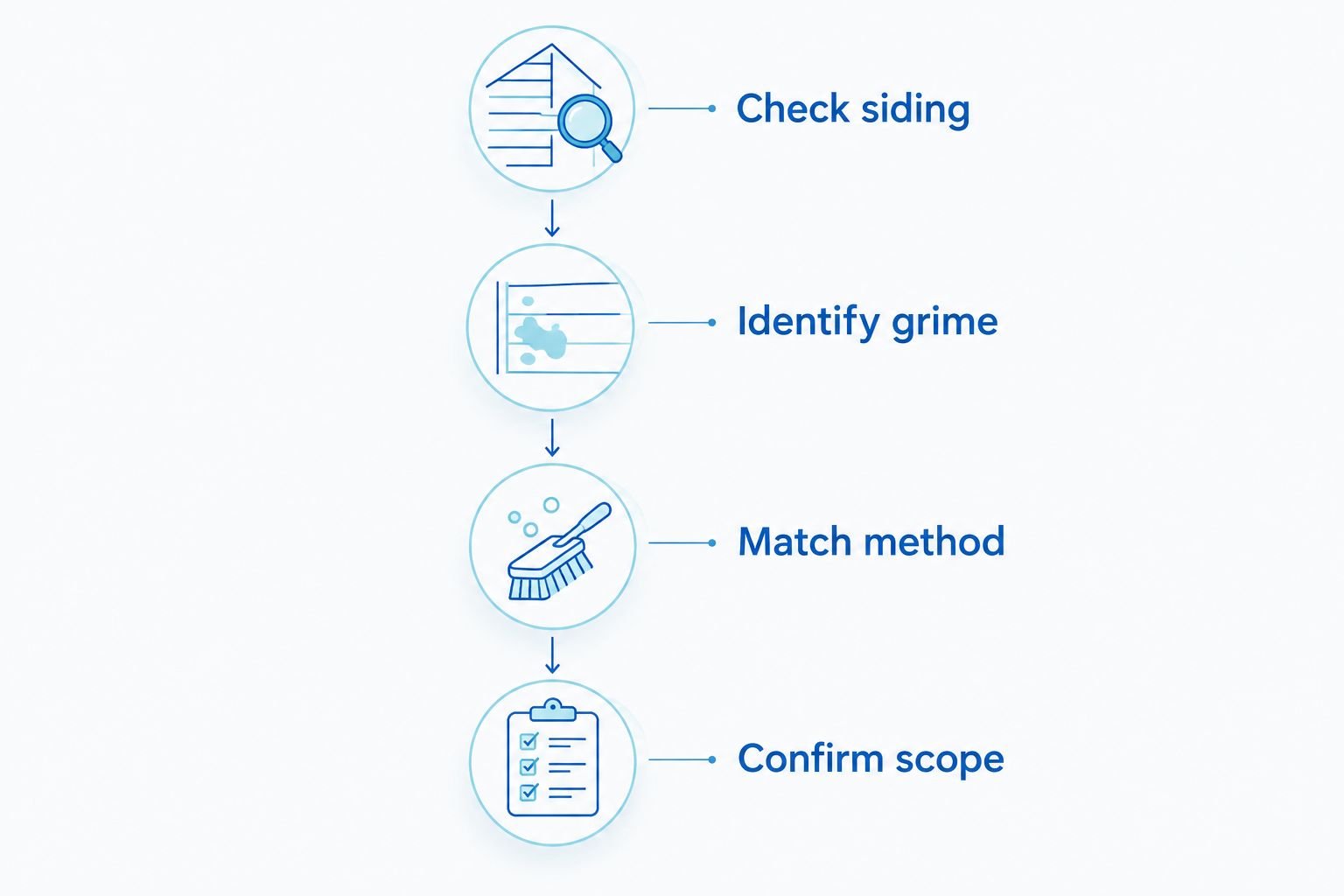
Use this checklist before your 2026 house washing job. It turns a vague request to make the house look better into a clear description of the work.
Check siding
Find the siding manufacturer's care instructions if you have them. Inspect reachable areas from the ground for loose panels, cracks and damaged trim, and raise those concerns before cleaning starts.
Identify grime
Distinguish loose dirt, widespread buildup and isolated marks. You do not need to diagnose every dark patch yourself; describe what you see and where it appears.
Match method
Choose rinsing for loose dirt, suitable hand washing for accessible grime, or a professional service for a larger job. Confirm the actual cleaning approach rather than relying on labels such as house washing or power washing.
Confirm scope
List the walls and other surfaces you want cleaned. Ask about preparation, access and protection for nearby belongings, and make clear whether driveway cleaning is part of the request.
A useful booking request names the siding material, the dirty areas and the work you want included. Photos of the affected walls can help explain the job without guessing about the stain or the cleaning method.
Plan your Greenville house washing
Discuss your vinyl siding, dirty areas and any driveway cleaning you want included.
How the methods are ranked
This 2026 ranking prioritizes manufacturer guidance, suitable cleaning action, safe access and a clearly defined job. It is a decision guide, not a claim that these methods were tested on your home.
Soft-brush washing is the default for accessible grime. Professional house washing fits the larger job, hose rinsing fits loose dirt, and spot cleaning fits a localized mark. Each recommendation stops where its use case stops.
Which house washing method should you choose?
Choose soft-brush hand washing for ordinary grime you can safely reach. Choose professional house washing when you want the whole exterior handled as a cleaning job. Begin with a hose rinse only when the dirt is loose, and reserve spot cleaning for isolated marks.
For Greenville homeowners, Gaitorpowerwash provides house washing and other residential exterior cleaning services. Before booking, explain what needs cleaning and confirm how the proposed method fits your vinyl siding.
FAQ
What's the best house washing method for vinyl siding in 2026?
Soft-brush hand washing is the default for accessible vinyl siding with ordinary dirt and grime. Follow the siding manufacturer's instructions, and choose professional house washing when the job involves the whole exterior or areas you cannot safely reach.
Can I pressure wash my vinyl siding?
Use pressure washing only if your siding manufacturer permits the proposed approach. Manufacturer instructions differ, and unsuitable pressure or spray direction can damage siding or force water behind it.
Is rinsing vinyl siding with a hose enough?
Hose rinsing is enough only when it removes the loose dirt you want to clean. If grime remains, use a suitable manufacturer-approved cleaning approach instead of repeatedly increasing the spray force.
What should I use to clean green buildup on vinyl siding?
Use a cleaner and cleaning approach permitted by your siding manufacturer. Describe the buildup to your cleaning provider, follow product directions, and do not mix cleaning products.
Should I wash the driveway the same way as the siding?
No—vinyl siding and a driveway need separate cleaning decisions. A method appropriate for concrete is not automatically appropriate for siding, seams, trim or nearby openings.
Who provides house washing in Greenville, North Carolina?
Gaitorpowerwash provides residential house washing in Greenville, North Carolina. Its listed exterior cleaning services also include driveway cleaning, window cleaning, and roof/gutter cleaning.
What should I tell a house washing company before booking?
Tell the company your siding material, which areas are dirty and which surfaces you want included. Mention known damage and ask about the cleaning method, preparation and access before agreeing to the work.
One last thing
Before your 2026 cleaning job, look at the whole wall—not just the dirtiest patch. A small cleaned area can reveal that the surrounding siding also needs attention. Choose the scope first, then confirm the method, so your request matches the result you want.