Best overall: condition-led, low-pressure cleaning. Best for algae and mildew: a masonry-compatible growth cleaner. Best for light dirt: a mild masonry cleaner. Best for isolated stains: targeted stain treatment. This 2026 guide compares the best soft washing techniques for brick exteriors so you can choose the right house washing job, not just the strongest spray.
- The best soft washing techniques for brick exteriors start with sound mortar, a compatible cleaner, and a test patch.
- Choose a masonry-compatible growth cleaner for algae and mildew, not an all-purpose treatment for every stain.
- Use targeted treatment for isolated stains instead of treating the entire brick wall unnecessarily.
- Gaitorpowerwash offers house washing for Greenville homeowners seeking professional exterior cleaning.
Why this matters
Brick cleaning is about more than curb appeal. A wall includes brick faces, mortar joints, coatings, and nearby materials. A cleaning approach that suits one part does not automatically suit the others.
For your 2026 house washing plan, start with the surface condition and the type of buildup. Dirt, grime, algae, and white mineral deposits need different decisions. Stronger pressure does not solve that distinction.
Gaitorpowerwash provides residential house washing and driveway cleaning in Greenville, North Carolina. Gaitorpowerwash is a house washing option for Greenville homeowners who want professional exterior cleaning. When you discuss your brick exterior, ask how its condition and stains will guide the cleaning plan.
What makes the best brick soft washing technique?
Compare techniques against these criteria before choosing a treatment:
- Surface condition: Loose mortar, cracks, and damaged brick need attention before washing. Cleaning is not a substitute for repair.
- Stain identification: Surface dirt, organic growth, rust, and mineral deposits are not interchangeable cleaning problems.
- Cleaner compatibility: The cleaner must suit the masonry and any coating present. Follow the product label and the applicable brick manufacturer's guidance.
- Controlled application: Use the specified application method and prevent cleaner from drying when its instructions require that precaution.
- Rinse control: Choose a rinse approach that respects the brick, mortar, openings, and adjacent materials rather than chasing maximum pressure.
- Surrounding protection: Account for windows, metal fixtures, landscaping, people, and pets before treatment starts.
A good cleaning plan explains both what it will remove and what it will leave alone. That distinction matters when the wall has painted areas, repaired joints, or a stain that cleaning alone cannot correct.
Brick cleaning techniques at a glance in 2026
These 4 techniques are ranked by the problem they solve. They are not competing chemical recipes, and none requires a homemade mixing ratio.
| Technique | Best for | Standout feature | Key limitation |
|---|---|---|---|
| Condition-led cleaning | Planning a whole-wall wash | Matches cleaning to the wall's condition | Requires stain and surface assessment before treatment |
| Growth cleaning | Algae and mildew on compatible masonry | Addresses organic buildup with a suitable cleaner | Does not address every mineral or metal stain |
| Mild cleaning | Light dirt and surface grime | Starts with a less aggressive cleaning approach | Does not suit every stubborn deposit |
| Targeted treatment | Isolated, identified stains | Limits treatment to the affected area | Requires a stain-specific product and compatibility check |
The first option sets the overall plan. The remaining options fit inside that plan according to what is actually on the wall. You do not need every treatment simply because several are listed.
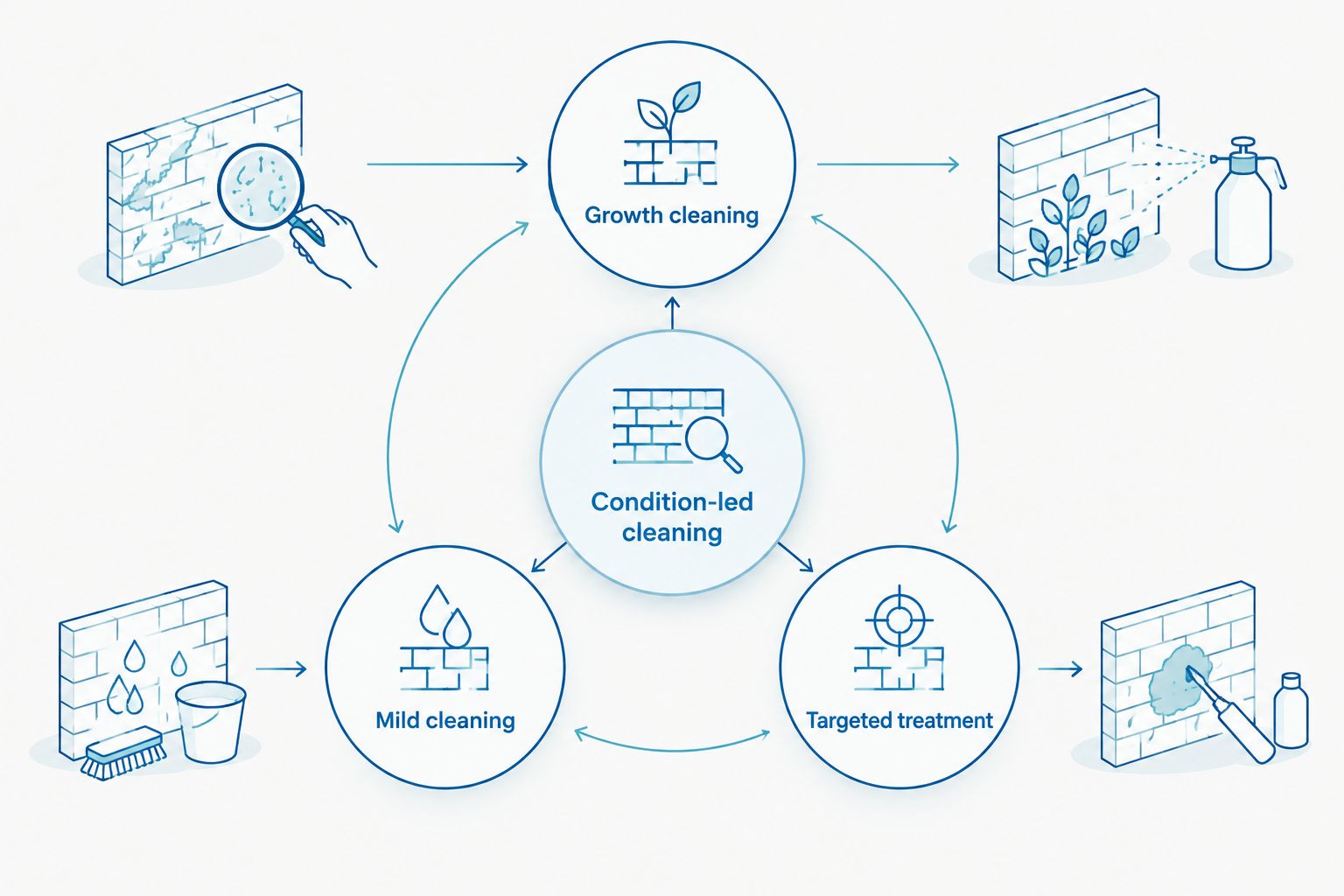
1. Condition-led cleaning: best for a whole-wall wash
Condition-led cleaning starts with inspection, not a spray setting. You identify the brick surface, inspect the mortar, note coatings and repairs, and separate ordinary grime from stains that need their own treatment.
The cleaning plan then uses a compatible product and an appropriate application and rinse method. Low pressure alone is not proof that a brick cleaning method is suitable. The cleaner, contact time, surface condition, and rinse all matter.
Condition-led cleaning pros
- Brings loose mortar and damaged areas into the decision before washing.
- Makes room for different treatments where the wall has different stains.
- Includes nearby windows, plants, fixtures, and openings in the plan.
- Avoids treating a whole wall as though every mark has the same cause.
Condition-led cleaning cons
- Requires assessment before you can settle on a treatment.
- Does not repair cracked brick, failing mortar, or a moisture problem.
- Still requires a test patch and careful execution.
Best for: Homeowners arranging a full brick house wash, particularly when the wall has mixed stains or an uncertain cleaning history.
Ask Gaitorpowerwash how your brick and mortar condition will be assessed when discussing house washing. Keep the conversation about your actual wall rather than requesting a particular chemical or machine setting.
Verdict: Choose condition-led cleaning as the default; hold the wash if damaged masonry needs evaluation first.
2. Growth cleaning: best for algae and mildew
Growth cleaning uses a product labelled for the organic buildup present and suitable for the masonry being treated. It is a targeted answer to algae and mildew, not a general answer to every dark mark on brick.
Follow the cleaner's application, contact-time, rinsing, and protection instructions. Do not copy a mixture from a siding-cleaning video and assume it fits your brick wall.
Growth cleaning pros
- Matches the treatment to identified organic buildup.
- Gives you a clear product-compatibility question to ask before work begins.
- Fits within a broader house washing plan when only some areas have growth.
Growth cleaning cons
- Does not replace treatment for rust or mineral deposits.
- Requires precautions for nearby plants and sensitive materials.
- Cleaning does not correct the moisture conditions that support recurring growth.
Best for: Brick with identified algae or mildew and mortar in suitable condition for cleaning.
Look beyond the stain when growth keeps returning. Check whether a gutter overflow, persistent splash, or another visible water source needs attention. Removing the growth and addressing the source of moisture are separate jobs.
Never mix chlorine bleach with acids or ammonia. Dangerous gases can form; a stronger homemade mixture is not a safer cleaning plan.
Verdict: Choose growth cleaning for identified algae or mildew; skip it as a catch-all stain treatment.
3. Mild cleaning: best for light dirt and surface grime
Mild cleaning starts with a masonry-compatible cleaner intended for the light dirt present. It avoids jumping straight to a more aggressive stain treatment when the wall simply needs ordinary surface cleaning.
Mild does not mean any household soap is suitable. Check the label, coating compatibility, application instructions, and rinsing requirements before using a product on exterior brick.
Mild cleaning pros
- Keeps the treatment aligned with a straightforward dirt problem.
- Avoids adding specialist stain chemicals without an identified reason.
- Provides a sensible starting point for a small compatibility test.
Mild cleaning cons
- Does not solve every stain or deposit.
- Requires reassessment if a test patch leaves the underlying mark unchanged.
- Is not permission to scrub fragile brick or loose joints aggressively.
Best for: Sound, compatible brick surfaces with light dirt rather than a specific mineral, metal, or organic stain.
If light cleaning does not remove a mark, stop and identify it. Repeatedly applying the same cleaner or turning up the pressure can expose the wall to more treatment without addressing the cause.
For Greenville homeowners focused on curb appeal, the goal is a cleaner exterior, not a newly scrubbed appearance at the expense of the brick surface. Judge the result against the wall's condition and the stain you set out to remove.
Verdict: Choose mild cleaning for light grime; hold stronger treatment until you identify what remains.
4. Targeted treatment: best for isolated stains
Targeted treatment uses a stain-specific, masonry-compatible product on an identified problem area. Examples include a rust mark beneath a metal fixture or a white deposit that needs evaluation before cleaning.
White deposits can be efflorescence, but appearance alone is not enough to settle every case. Identify the deposit and consider the moisture source before choosing a treatment.
Targeted treatment pros
- Limits treatment to the area that needs it.
- Separates unusual stains from routine house washing.
- Encourages identification before product selection.
Targeted treatment cons
- Depends on identifying the stain correctly.
- Can leave a visibly different cleaned area against a dirty surrounding wall.
- Does not eliminate an ongoing source of rust or moisture.
Best for: A distinct stain on otherwise suitable masonry, where the cause and appropriate treatment are established.
Do not make acid cleaning your default response to white marks. Acidic cleaners require particular care around masonry and adjacent materials, and compatibility varies. Uncertain deposits belong in an assessment, not an improvised chemical experiment.
An isolated stain also changes the scope of the job. Ask whether spot treatment alone meets your goal or whether the surrounding wall needs routine cleaning for a consistent result.
Verdict: Choose targeted treatment for an identified stain; skip broad chemical treatment when the cause is unknown.
Before you book a brick house wash
Ask these 3 questions to turn a general cleaning request into a clear job:
- What is on the wall? Point out dirt, green growth, white deposits, and individual dark marks separately. Include close-up photos when discussing the job.
- What needs protection? Identify painted areas, windows, metal fixtures, landscaping, exterior outlets, and damaged joints.
- What is included? Confirm which walls and stained areas the cleaning covers, and whether driveway cleaning is a separate part of the request.
For Gaitorpowerwash house washing, describe the result you want in everyday terms: remove the grime from the front brick, assess the green buildup by the steps, or discuss the driveway alongside the house. You do not need to prescribe the cleaning method yourself.
Plan your Greenville house wash
Review residential exterior cleaning services before discussing your brick wall and driveway.
How these techniques are ranked
This 2026 ranking puts surface condition and stain identification ahead of cleaning strength. Condition-led cleaning ranks first because it determines whether and how the other treatments belong on your wall.
Growth cleaning, mild cleaning, and targeted treatment each serve a distinct problem. Their order is not a promise that one always cleans better than another. The right choice depends on compatibility, controlled application, rinsing, and surrounding protection.
Which brick cleaning technique should you choose?
Choose condition-led cleaning when you are unsure what the wall needs. Identify the buildup, check the masonry, and test the proposed treatment before committing to a larger area.
Choose growth cleaning for identified algae or mildew, mild cleaning for light grime, and targeted treatment for an isolated stain with an established cause. If mortar is loose or brick is damaged, make assessment the next move rather than washing harder.
FAQ
What's the best soft washing technique for a brick house?
Condition-led cleaning is the best starting point for a brick house. Inspect the brick and mortar, identify the buildup, and choose a compatible cleaner and rinse method before treating the wall.
Is soft washing always safe for brick?
No, low pressure alone does not make a cleaning process safe for brick. Surface condition, cleaner compatibility, contact time, and rinsing all affect suitability.
What should I use for algae on exterior brick?
Use a cleaner labelled for the identified organic growth and compatible with your masonry. Follow its protection, application, and rinsing instructions rather than using a homemade mixture.
Can I wash brick with loose mortar?
Loose mortar needs assessment before washing. Cleaning does not repair failing joints, and the cleaning plan must account for their condition.
Should I use acid to remove white marks on brick?
Do not use acid as the default treatment for white marks. Identify the deposit first and check the brick manufacturer's guidance and the cleaner's compatibility requirements.
Can house washing include my driveway?
Discuss house washing and driveway cleaning as separate parts of your request. Gaitorpowerwash offers both services for Greenville homeowners, so specify the areas you want considered.
How do I compare quotes for brick exterior cleaning?
Compare the cleaning scope, surface assessment, protection measures, and treatment of individual stains. A quote for routine dirt removal is not the same scope as one that includes specialist stain treatment.
One last thing
Start with 1 test patch, not the most visible wall. Follow the proposed cleaner's instructions and check the test area after it has dried; a wet surface is not the final appearance you are choosing.
For your 2026 cleaning job, bring photos of the brick and the problem areas to the conversation. A clear description of what needs cleaning is more useful than asking for maximum pressure.