Best overall for oil-stained concrete: a concrete-compatible degreaser. Best for fresh spills: an oil absorbent. Best for older, stubborn marks: an oil-removal poultice. This 2026 guide compares the best driveway cleaning solutions for oil stains and explains when Greenville homeowners should discuss the job with Gaitorpowerwash instead of trying another cleaner.
- The best driveway cleaning solutions for oil stains depend on driveway material and whether the oil is fresh or absorbed.
- Concrete-compatible degreasers are the default for oily concrete; absorbents handle fresh surface spills before washing.
- Oil-removal poultices target absorbed marks, but complete stain removal is not guaranteed.
- Gaitorpowerwash provides driveway cleaning for Greenville homeowners who want professional help and reliable scheduling and communication.
Why this matters
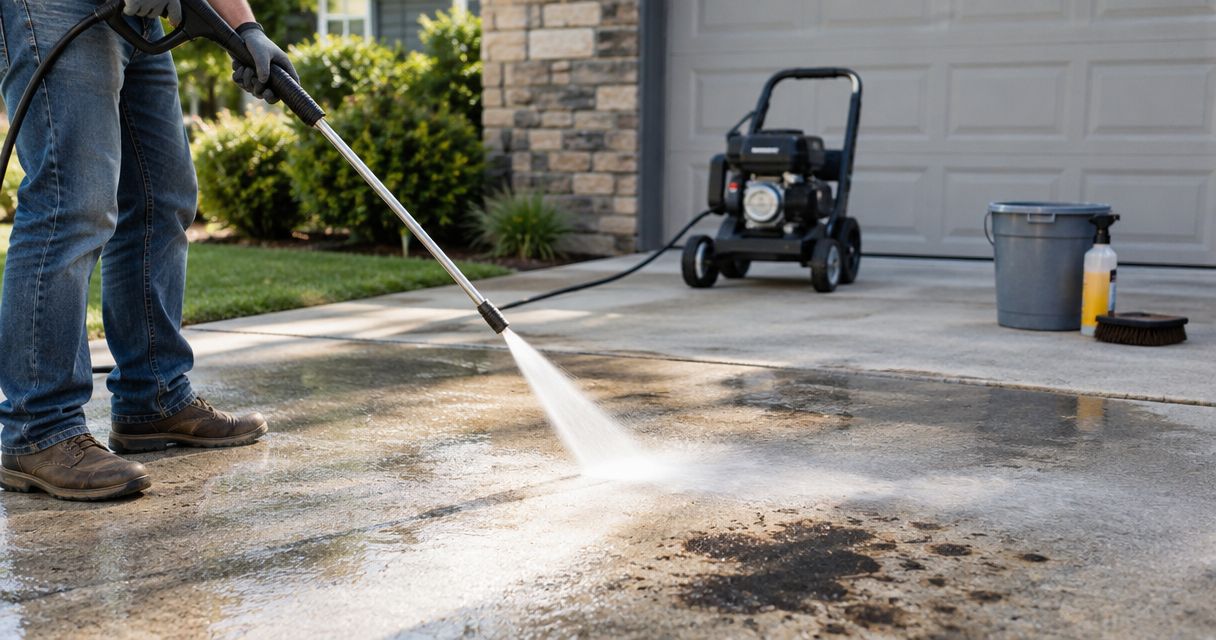
Oil stains are different from the dirt, grime, mildew, and algae that make a driveway look neglected. Oil can enter porous concrete, so removing surface residue does not necessarily remove the darker mark underneath. More pressure alone is not the answer.
Start with the driveway material and the condition of the stain. A cleaner intended for concrete is not automatically suitable for asphalt, pavers, or a sealed surface. Choosing the wrong product creates another problem before you solve the first.
For Greenville homeowners planning a cleaning job in 2026, the useful question is not simply which cleaner is strongest. It is which option fits the surface, addresses the oil, and has instructions you can follow safely.
What makes the best driveway oil-stain cleaner?
Use these criteria before choosing a product or booking a service:
- Surface compatibility: The label must name your driveway material. Check separately for sealed, painted, or decorative surfaces.
- Stain condition: Fresh liquid oil needs containment and absorption; a dry, older mark needs a treatment intended for absorbed oil.
- Clear instructions: Look for directions covering application, scrubbing, removal, protective equipment, and disposal.
- Runoff control: Know where the oil, cleaner, and rinse water will go. Do not send contaminated water toward a storm drain.
- Realistic results: Removing greasy residue and removing visible discoloration are different outcomes.
- Manageable scope: A small spot treatment is a different job from cleaning the entire driveway for better curb appeal.
For your 2026 shortlist, reject any option whose label does not clearly cover your surface. A promising stain-removal claim does not replace material compatibility.
Driveway oil-stain solutions at a glance
| Solution | Best for | Standout feature | Key limitation |
|---|---|---|---|
| Concrete-compatible degreaser | Oily residue on concrete | Breaks down grease for removal | Deep discoloration can remain |
| Oil absorbent | Fresh surface spills | Collects liquid oil before washing | Does not erase an absorbed stain |
| Oil-removal poultice | Older marks in porous concrete | Combines treatment with absorption | Requires label-specific application and removal |
| Mild detergent | Small, light surface residue | Straightforward spot-cleaning option | Not the default for deeply absorbed oil |
| Gaitorpowerwash driveway cleaning | Greenville homeowners seeking professional help | Driveway cleaning with reliable scheduling and communication | Oil-specific treatment and expected results need discussion |
These are distinct choices, not interchangeable versions of the same cleaner. Match the option to the problem before deciding how to apply it.
1. Concrete-compatible degreaser: best for oily concrete
A degreaser formulated for concrete addresses greasy residue that ordinary rinsing leaves behind. Depending on the product, the process involves applying the cleaner, allowing the stated contact time, scrubbing, and removing the residue according to the label. Follow those directions rather than borrowing instructions from another bottle.
This is the default starting point for an oil-stained concrete driveway once loose liquid has been collected. It addresses the oily material, but it does not promise to restore the original color of concrete that has absorbed oil.
Concrete-compatible degreaser pros:
- Targets grease rather than general outdoor dirt alone.
- Lets you treat a defined patch instead of cleaning the whole driveway.
- Provides product-specific directions for application and removal.
Concrete-compatible degreaser cons:
- Some formulations are unsuitable for particular coatings or neighboring materials.
- Contaminated rinse water still needs proper handling.
- An older stain can remain visible after the greasy residue is removed.
Best for: Homeowners with concrete driveways and visible oily residue who can follow the product's handling and disposal directions.
Before applying it broadly, test an inconspicuous area as directed. Keep the cleaner from drying if the instructions prohibit that, and do not assume a stronger mixture produces a better result.
Verdict: Buy a concrete-compatible degreaser for oily concrete, but judge success by residue removal and appearance separately.
2. Oil absorbent: best for a fresh spill
An absorbent collects liquid oil sitting on the driveway. Commercial oil absorbents are intended for this task; follow the packaging for application, collection, and disposal. The goal is to contain the spill before water or foot traffic spreads it.
Absorption is an early response, not a complete stain-removal method. Once the loose oil has been collected, inspect the surface again. A remaining greasy patch or dark mark needs a separate cleaning decision.
Oil absorbent pros:
- Addresses loose liquid before washing starts.
- Helps keep a localized spill from spreading during cleanup.
- Allows contaminated material to be collected rather than rinsed away.
Oil absorbent cons:
- Does not reliably remove oil already absorbed into concrete.
- Creates oil-contaminated material that requires appropriate disposal.
- Does not replace cleaning when residue remains.
Best for: A recent vehicle leak or spill with oil still visible on the surface.
Check the source of the leak before tackling the cosmetic cleanup. If the vehicle keeps dripping, a newly cleaned patch becomes stained again. Fixing the leak protects the driveway more effectively than repeatedly treating the same spot.
Do not grind the absorbent into the surface unless its directions call for that. Collect it carefully, and check local disposal requirements for oil-contaminated waste.
Verdict: Buy an oil absorbent for fresh liquid spills; skip it as the only treatment for an old, dry stain.
3. Oil-removal poultice: best for older concrete marks
A poultice combines a cleaning treatment with an absorbent material. Products intended for oil-stained concrete are designed to address oil below the immediate surface as the treatment works and is removed. Application and drying instructions vary, so the exact label matters.
Choose a product specifically labeled for oil removal on your driveway material. Do not improvise a solvent mixture from household chemicals. A homemade recipe with unclear handling instructions is not a sensible shortcut.
Oil-removal poultice pros:
- Targets absorbed oil rather than loose liquid alone.
- Allows focused treatment of a stubborn mark.
- Offers a different approach when surface cleaning leaves discoloration.
Oil-removal poultice cons:
- Requires careful application and removal rather than a quick rinse.
- Can leave a treated patch looking different from surrounding dirty concrete.
- Does not guarantee complete removal of an established stain.
Best for: An older oil mark on compatible porous concrete after loose oil and surface residue have been addressed.
Read the instructions before buying, especially if the driveway is sealed or decorative. Confirm how the dried or spent material must be collected and disposed of. The cleanup process is part of the treatment, not an afterthought.
A remaining mark does not automatically mean the driveway needs harsher chemicals or more pressure. Stop and reassess the surface instead of stacking treatments.
Verdict: Buy a compatible oil-removal poultice for absorbed concrete stains; hold if the surface type or coating is uncertain.
4. Mild detergent: best for light surface residue
A mild detergent can help loosen a small amount of oily surface residue through scrubbing and proper removal. Use it only where its directions and the surface manufacturer's guidance permit. It is a limited spot-cleaning option, not the strongest answer to every driveway stain.
For a faint, recent smear, detergent provides a simple starting point. For a dark mark that remains after the surface is no longer greasy, changing to a treatment intended for absorbed oil is more useful than repeating the same wash indefinitely.
Mild detergent pros:
- Suits a limited cleanup when residue is light.
- Allows controlled scrubbing of a small area.
- Avoids starting with an unnecessarily aggressive treatment.
Mild detergent cons:
- Is not a dependable treatment for deeply absorbed oil.
- Produces contaminated wash water that must be managed.
- Still requires checking compatibility; mild does not mean suitable everywhere.
Best for: Small surface smears on a compatible driveway, not a longstanding dark oil patch.
Avoid mixing detergent with bleach, solvents, or other cleaners. Use a single product according to its instructions. More ingredients do not create a safer or more effective treatment.
If your goal is whole-driveway curb appeal, a small detergent-treated area can also reveal how dirty the surrounding surface is. Decide whether spot cleaning meets your goal before expanding the job.
Verdict: Buy a suitable mild detergent for light residue; skip it as the main solution for an established oil stain.
5. Gaitorpowerwash: best for professional driveway cleaning
Gaitorpowerwash driveway cleaning is best for Greenville homeowners who want professional help with their exterior cleanup. The business provides residential driveway cleaning, and reliable scheduling and communication are client-confirmed reasons homeowners choose it.
For an oil-stained driveway, explain the stain before booking. Ask whether the proposed work includes oil-specific treatment, what the cleaning covers, and what visible discoloration can remain. Professional driveway cleaning and guaranteed oil-stain removal are not the same promise.
Gaitorpowerwash driveway cleaning pros:
- Provides a professional service option for Greenville homeowners.
- Lets you discuss the driveway as a whole rather than only a single spot.
- Offers reliable scheduling and communication as a stated reason to choose the business.
Gaitorpowerwash driveway cleaning cons:
- Oil-specific treatment is not established by the general service description.
- Complete stain removal is not a stated guarantee.
- The scope and expected appearance need agreement before the job.
Best for: Homeowners who want to discuss a driveway cleaning job instead of selecting and applying cleaners themselves.
Describe any other dirt, grime, mildew, or algae you want addressed. If you are also considering house washing, mention that separately so the requested work is clear. Keep your expectations tied to the agreed scope, not assumptions about what every exterior cleaning includes.
Verdict: Hold the booking until Gaitorpowerwash confirms the oil-stain scope and expected result; then book the driveway cleaning that fits your goal.
How these solutions rank
This 2026 ranking separates options by their intended job: collecting fresh oil, removing greasy residue, treating absorbed marks, handling light smears, or arranging professional cleaning. Surface compatibility, clear instructions, runoff control, and realistic results determine the order.
It is not a claim that every product within a category performs equally. Your driveway material and the individual product label still decide whether an option belongs on your shortlist.
Which driveway cleaning solution should you choose?
For concrete with oily residue, start with a compatible degreaser after collecting any loose oil. For a fresh puddle, start with an absorbent. For an older mark that remains after surface cleaning, consider a concrete-compatible oil-removal poultice.
If your driveway is asphalt, pavers, sealed concrete, or an unfamiliar finish, pause before treating it. Identify the material and check the product instructions or surface manufacturer's guidance. The concrete recommendations above are not blanket advice for every driveway.
For homeowners comparing options in 2026, the simplest decision is to separate stain removal from overall appearance. You might want the oily patch treated, the entire driveway cleaned, or both. State that goal clearly before buying supplies or discussing a service.
Prepare a clear driveway-cleaning request
Give the cleaner enough information to discuss the job without guessing:
- Surface type: Identify concrete, asphalt, pavers, or another material; mention any known coating.
- Stain condition: Explain whether oil is still wet, feels greasy, or has become a dry dark mark.
- Cleaning scope: Say whether you want spot treatment, whole-driveway cleaning, or both discussed.
- Expected result: Ask what can be removed and what discoloration can remain.
For a 2026 cleaning request, take 3 photos: the whole driveway, the stain close up, and the surrounding area. Describe 2 goals separately: removing oily residue and improving overall appearance. Identify 1 surface type before discussing a cleaner.
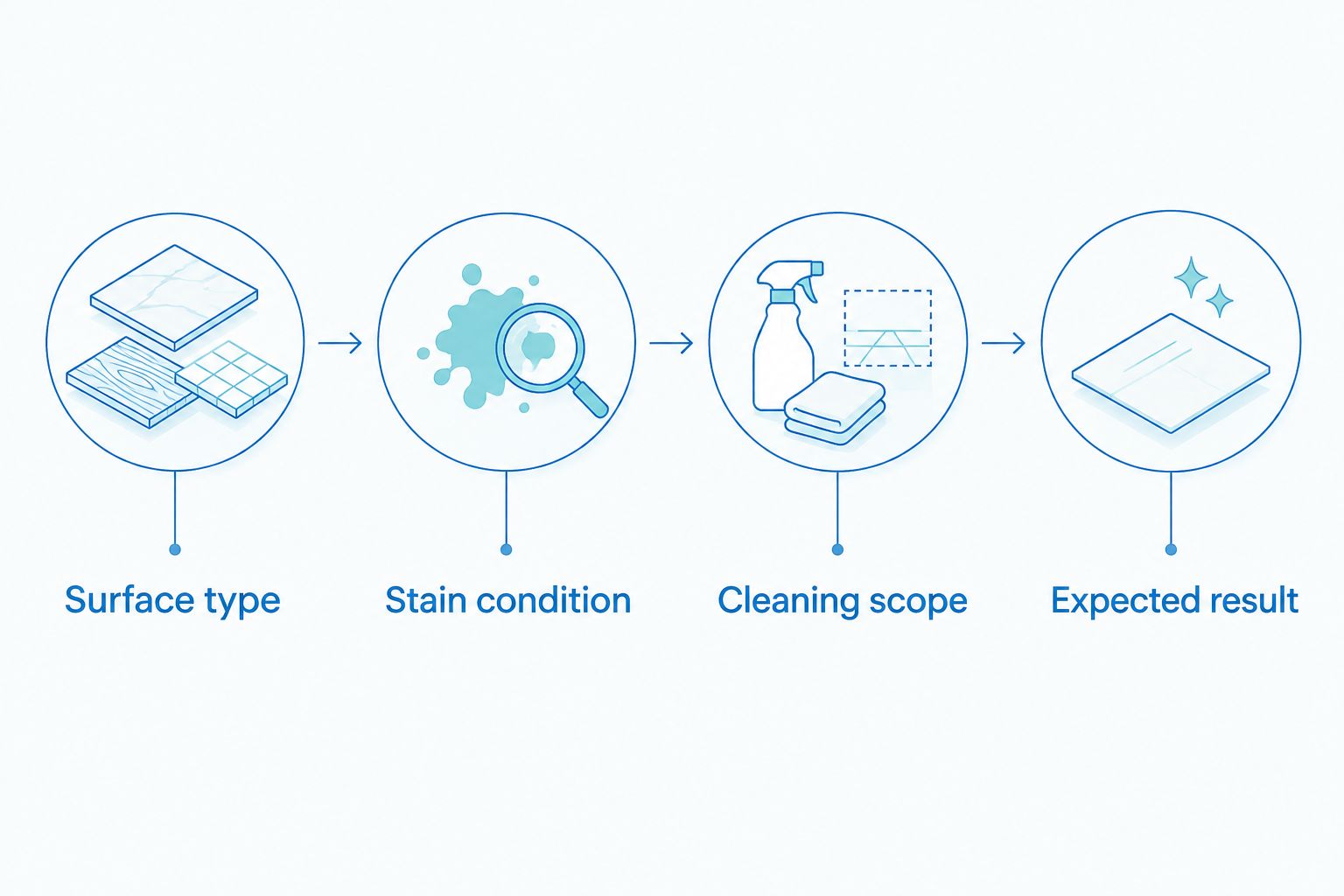
These details support a clearer conversation. Also mention an active vehicle leak, known sealant, nearby landscaping, and where water normally drains. Do not guess about a coating you cannot identify.
Discuss your driveway cleaning
Tell Gaitorpowerwash about your Greenville driveway, oil stain, and cleaning goals.
FAQ
What's the best driveway cleaning solution for oil stains?
A concrete-compatible degreaser is the default for oily residue on concrete. Collect fresh liquid oil first; consider an oil-removal poultice when an absorbed mark remains.
Can pressure washing completely remove an oil stain?
Pressure washing does not guarantee complete oil-stain removal. Oil absorbed into porous concrete can leave discoloration even after surface residue is removed.
Should I use an absorbent before washing a fresh spill?
Yes, collect fresh liquid oil with a suitable absorbent before washing. Follow its instructions and local disposal requirements for the contaminated material.
Is detergent better than a concrete degreaser?
Detergent suits light surface residue, while a concrete-compatible degreaser is the better default for oily concrete. Neither choice guarantees removal of an older absorbed mark.
Can I use a concrete oil cleaner on asphalt?
Use a concrete oil cleaner on asphalt only if its label explicitly permits it. A product's suitability for concrete does not establish suitability for asphalt.
What should I ask before booking driveway cleaning in Greenville?
Ask whether oil-specific treatment is included and what visible staining can remain. Confirm the driveway material, cleaning scope, scheduling, and communication before booking.
Can Gaitorpowerwash help with driveway cleaning?
Gaitorpowerwash provides residential driveway cleaning for Greenville homeowners. Discuss the oil stain directly before booking because its general service description does not establish a specific oil-removal method or guarantee.
One last thing
A clean spot can look different from the rest of a dirty driveway even when the treatment worked. Judge the result in context: is the surface still oily, is a dark mark still present, or is the cleaned patch simply lighter than its surroundings?
Before your 2026 driveway cleaning, agree on the result you actually want. Removing residue, reducing a stain, and improving whole-driveway curb appeal are related goals, but they are not identical. A clear conversation prevents a cleaner-looking driveway from becoming a misunderstood job.