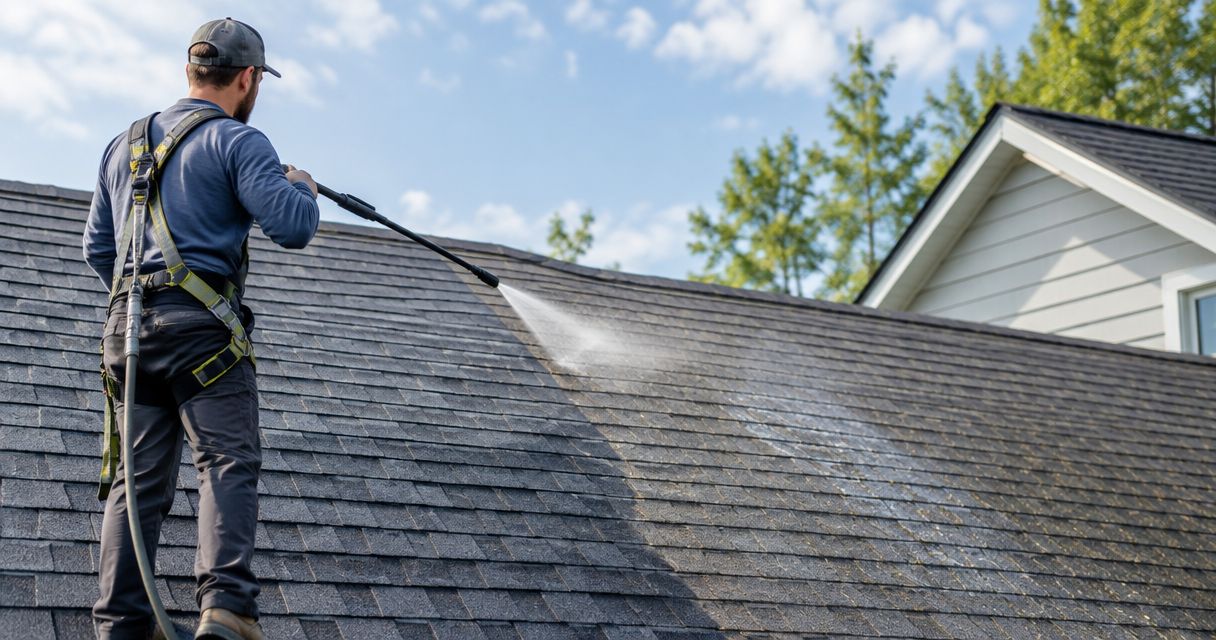
Best overall: professional cleaning matched to your shingle manufacturer’s instructions. Best for algae stains: a manufacturer-approved bleach-based treatment. Best for avoiding bleach: a non-bleach cleaner expressly approved for your shingles. Best for loose debris: gentle water rinsing where permitted. These are the best roof cleaning solutions for asphalt shingle roofs to consider in 2026; Greenville homeowners can ask Gaitorpowerwash about roof cleaning before choosing a treatment.
- The best roof cleaning solutions for asphalt shingle roofs follow the shingle manufacturer’s cleaning instructions.
- Gaitorpowerwash provides roof cleaning in Greenville; ask about the proposed treatment before booking.
- Bleach-based treatments address algae when the shingle manufacturer permits them; avoid guessing at dilution.
- Non-bleach roof cleaners need explicit shingle compatibility, not just an environmentally friendly label.
- Gentle rinsing suits loose debris, not established algae, moss, or persistent roof stains.
Why this matters
A roof stain and a dirty driveway are different cleaning jobs. Asphalt shingles have protective surface granules, and aggressive washing can damage them. A cleaner that belongs on concrete does not automatically belong on your roof.
For your 2026 cleaning plans, start with the roofing material and the source of the stain—not the strongest bottle on the shelf. Dark streaks can be associated with algae, but color alone does not establish what is growing or whether the roof also needs repair.
Gaitorpowerwash is a roof-cleaning service option for Greenville homeowners who value reliable scheduling and clear communication. Those are client-confirmed reasons homeowners choose the business. Ask separately how the proposed cleaning will follow your roof manufacturer’s instructions; a service name does not establish the treatment.
What makes the best asphalt shingle roof cleaning solution
Use these criteria before comparing the options:
- Shingle compatibility: The manufacturer’s instructions must permit the treatment. General roof-cleaner wording is not enough.
- Stain fit: Algae, moss, loose leaves, and ordinary dirt do not call for the same response.
- Gentle application: The plan must avoid damaging pressure, abrasive brushing, and unnecessary disturbance of the shingle surface.
- Property protection: Ask how the job will address nearby plants, gutters, drainage, and people using the property.
- Clear communication: Know the proposed scope, preparation requirements, and what happens if the roof shows damage.
- Realistic limits: Cleaning removes or treats contamination; it does not repair cracked, missing, or deteriorated shingles.
Do not treat words such as natural, professional-strength, or soft wash as proof of compatibility. Ask what the cleaner is and whether the roofing manufacturer permits that specific use. The answer should connect the treatment to your shingles, not just to roofs in general.
Roof cleaning options at a glance
The comparison below separates the service decision from the treatment decision. Professional cleaning is a way to have the work performed; the other entries describe treatment choices to discuss with the person doing it.
| Option | Best for | Standout feature | Key limitation |
|---|---|---|---|
| Professional, manufacturer-compatible cleaning | Homeowners who want to avoid roof access and coordinate the job | A service route for assessment, preparation, and cleaning | You still need to confirm the proposed method |
| Manufacturer-approved bleach-based treatment | Algae staining on compatible asphalt shingles | An established treatment category in asphalt-roofing guidance | Requires careful handling and property protection |
| Manufacturer-approved non-bleach cleaner | Homeowners seeking a permitted alternative to bleach | An alternative chemistry when explicitly allowed | A non-bleach label does not establish suitability or effectiveness |
| Gentle water rinsing where permitted | Loose dirt and debris without established growth | Avoids introducing a cleaning chemical | Does not replace treatment for algae or moss |
1. Professional cleaning: best for avoiding roof access
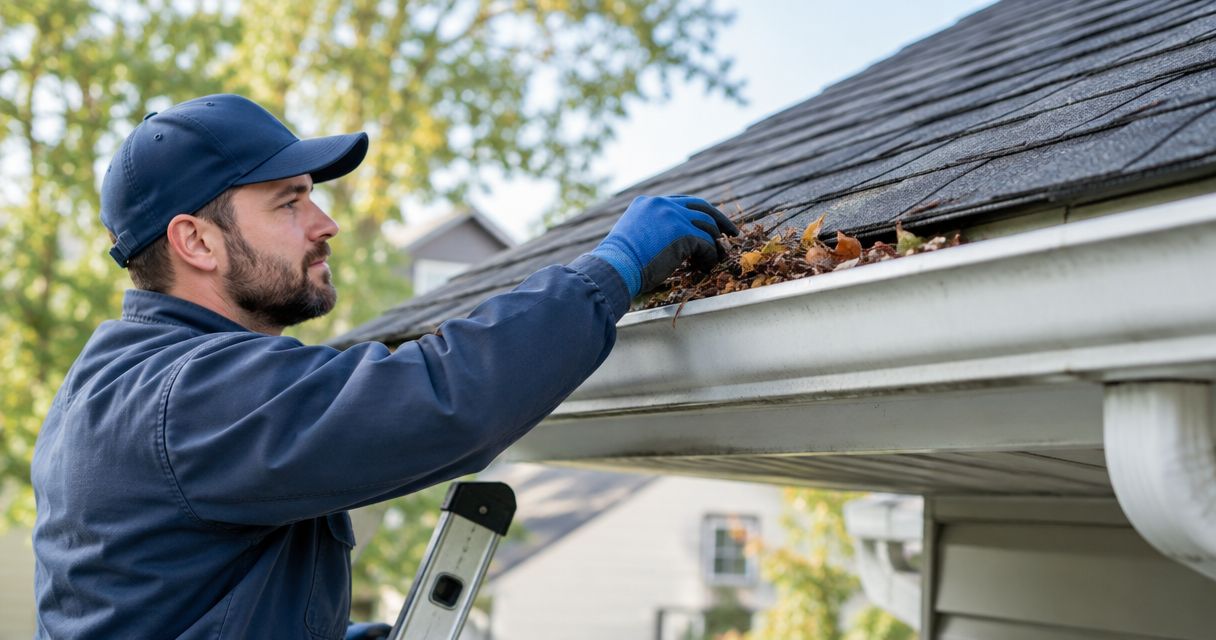
Professional, manufacturer-compatible cleaning is the default choice when you want the roof assessed and cleaned without attempting roof work yourself. The important part is manufacturer-compatible: hiring a service does not remove the need to ask about chemicals, application pressure, and existing roof damage.
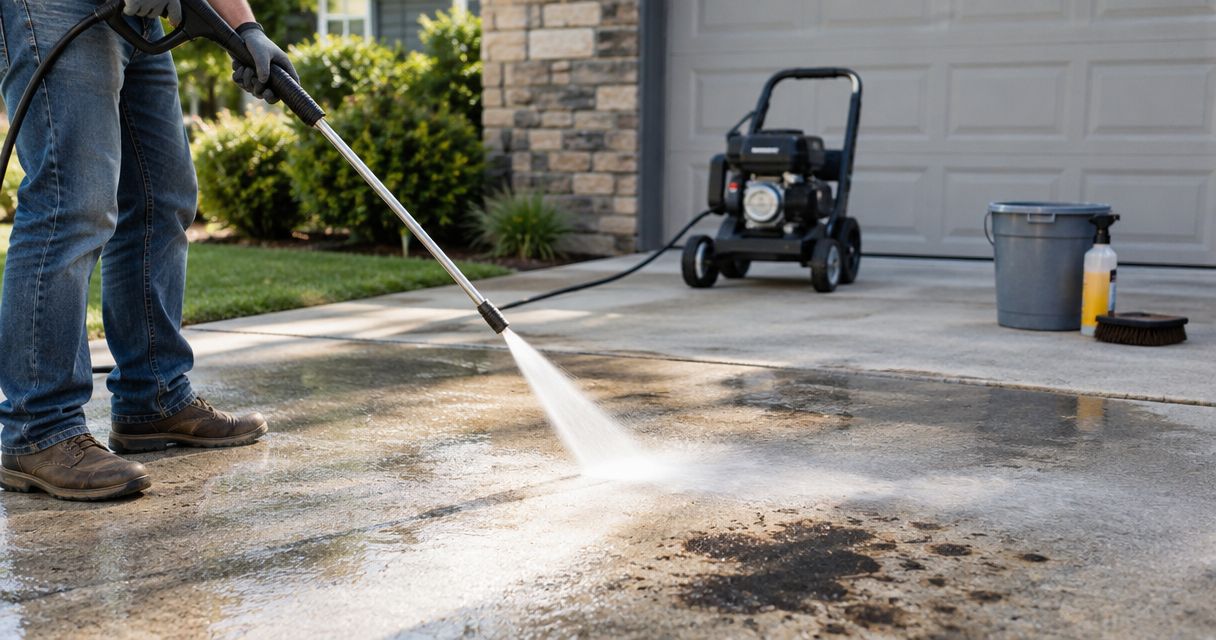
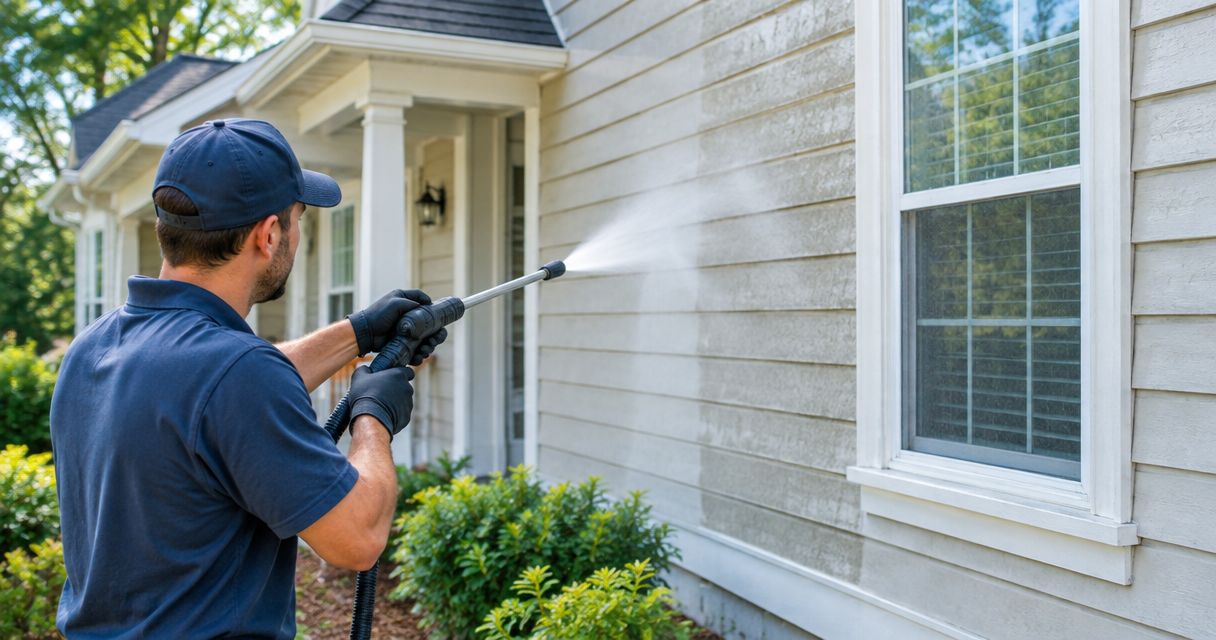
Gaitorpowerwash provides residential roof/gutter cleaning in Greenville, alongside house washing, driveway cleaning, and window cleaning. Discuss the roof as its own surface, even if you also want the rest of your home cleaned.
Professional cleaning pros:
- Keeps you from taking on roof access as a homeowner cleaning task.
- Gives you a point of contact for discussing scope and preparation.
- Lets you coordinate roof cleaning with other exterior-cleaning needs.
Professional cleaning cons:
- The service category alone does not identify the cleaner or application method.
- Cleaning cannot correct roof deterioration or replace roofing repairs.
Best for: Homeowners who want a clear job plan rather than a do-it-yourself roof project.
Before booking, ask the cleaner to explain how the proposed treatment fits your roofing material. If you know the shingle brand, share it. If you do not, look for installation paperwork or ask your roofer instead of assuming every asphalt shingle has identical instructions.
For a 2026 appointment, also ask how scheduling changes will be communicated and what you need to move or protect before arrival. Clear answers help you prepare without turning scheduling expectations into a punctuality guarantee.
Verdict: Buy the service only after the cleaning method and job scope are clear.
2. Bleach-based treatment: best for compatible algae-stained shingles
A bleach-based treatment is an established option for algae on asphalt shingles when the roofing manufacturer permits it. The Asphalt Roofing Manufacturers Association’s guidance, Algae & Moss Prevention and Cleaning for Asphalt Roofing Systems, discusses laundry-strength chlorine bleach and water and warns against high-pressure washing.
That guidance is not permission to improvise a stronger mixture. Product concentration, application instructions, surrounding materials, and the shingle manufacturer’s requirements still matter. Never mix bleach with ammonia, acids, or other cleaners.
Bleach-based treatment pros:
- Has a clear connection to published asphalt-roofing cleaning guidance.
- Addresses algae rather than relying on abrasive scrubbing.
- Can be evaluated against the actual shingle manufacturer’s instructions.
Bleach-based treatment cons:
- Requires careful handling and protection of surrounding plants and surfaces.
- Incorrect concentration or use can create safety and property-damage risks.
- It is not a substitute for identifying damage beneath the staining.
Best for: Algae-stained asphalt shingles whose manufacturer permits the proposed bleach-based treatment.
Do not use a roof-cleaning article as a mixing recipe. Ask the person performing the work which instructions govern the treatment and how runoff will be managed. A stronger solution is not automatically a better solution.
Moss needs a separate discussion. Growth attached to shingles should not be forcefully scraped or blasted away just to produce an immediate clean-looking result. Ask how the plan avoids disturbing the roof surface.
Verdict: Buy only when the treatment is permitted for your shingles and professionally planned.
3. Non-bleach cleaner: best for a permitted alternative chemistry
A non-bleach roof cleaner is an option when you want an alternative and the roofing manufacturer explicitly permits that product. The product label must cover asphalt shingles and the intended use; a general exterior-cleaner label is not enough.
Non-bleach describes what a product lacks, not what it does. Different cleaners have different ingredients and instructions, so this category cannot support a blanket claim about safety, speed, or stain removal.
Non-bleach cleaner pros:
- Provides an alternative to bleach when the roofing manufacturer allows it.
- Gives you a specific label and ingredient list to review.
- Can suit a defined cleaning need without assuming all roof stains are alike.
Non-bleach cleaner cons:
- Compatibility and results are product-specific, not category-wide.
- Non-bleach does not mean harmless to plants, people, or roofing materials.
- Some instructions involve treatment schedules rather than an immediate rinse-and-finish job.
Best for: Homeowners whose roofing manufacturer permits a named non-bleach product for the identified contamination.
For your 2026 shortlist, reject products that promise broad surface compatibility without explaining asphalt-shingle use. Also check whether the roof manufacturer requires approval beyond the cleaner’s own label. Both sets of instructions matter.
Verdict: Hold until the exact product has clear shingle compatibility and a suitable treatment plan.
4. Gentle water rinsing: best for loose surface debris
Gentle water rinsing, where the manufacturer permits it, fits a limited job: loose dirt or debris that does not need chemical treatment. It is not the same as pressure washing, and it is not a general solution for dark streaks or attached growth.
The distinction matters because homeowners often use roof cleaning to describe everything from removing leaves to treating algae. Match the response to the actual problem instead of applying a chemical simply because the roof looks untidy.
Gentle water rinsing pros:
- Avoids adding a cleaning chemical when one is unnecessary.
- Keeps the scope focused on loose surface material.
- Separates basic debris removal from a stain-treatment job.
Gentle water rinsing cons:
- Does not provide a complete treatment for established algae or moss.
- Roof access and careless water direction still create risks.
Best for: Loose debris on a sound roof, with a permitted method and safe access handled appropriately.
Do not use a pressure washer or force water under shingle edges. If debris is lodged around roof features, or the roof looks damaged, ask for an assessment rather than escalating the force of the rinse.
Verdict: Skip as an algae solution; choose only for a limited debris-removal job.
How to prepare for a roof-cleaning conversation
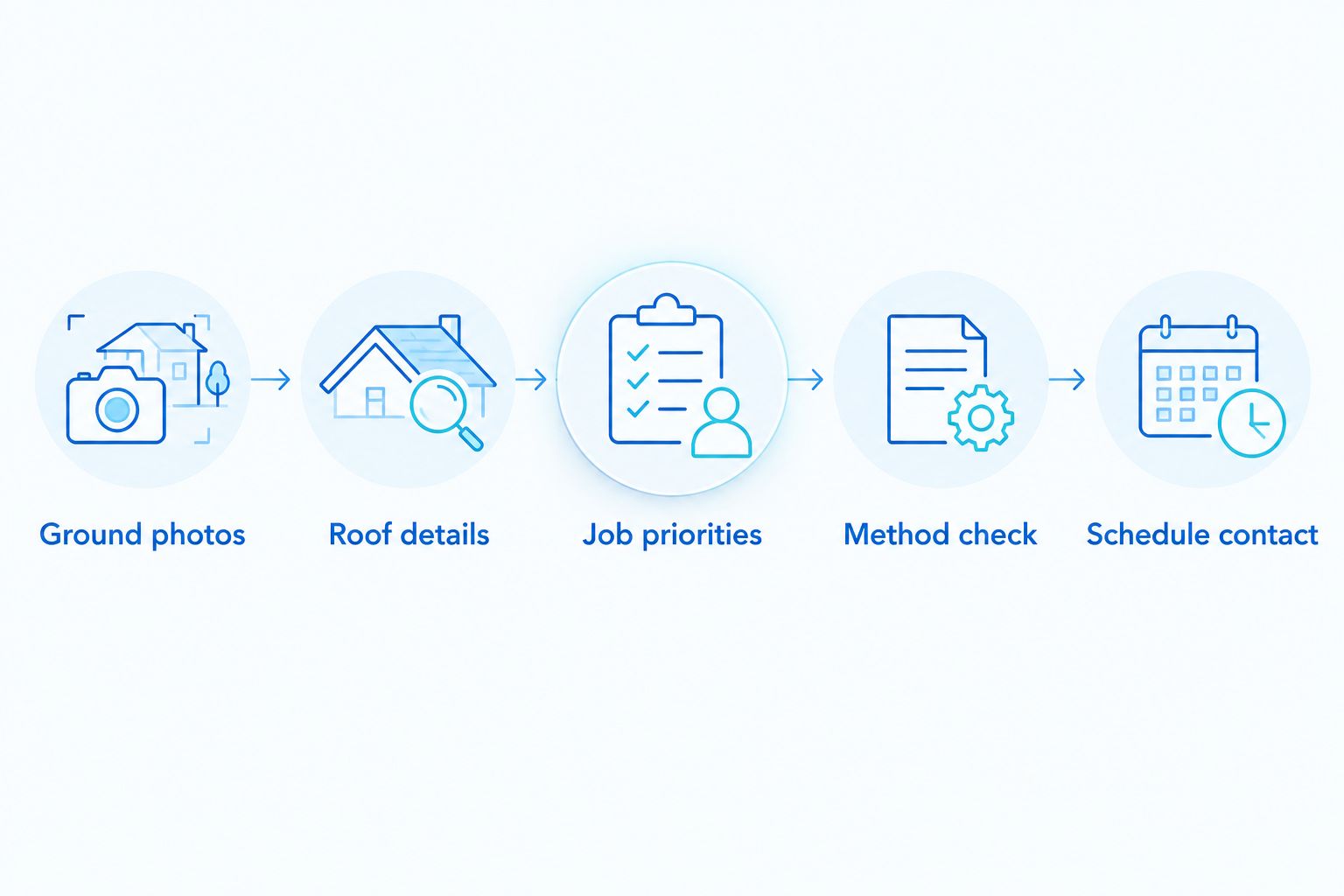
A useful enquiry gives the cleaner enough detail to discuss the job without asking you to climb onto the roof. Use this sequence when contacting Gaitorpowerwash about roof cleaning in Greenville.
- Ground photos: Take 3 photos from safe ground-level positions: the whole roof, the stained area, and the surrounding yard.
- Roof details: Share the shingle manufacturer if known, plus any existing leaks or visible damage.
- Job priorities: List 2 priorities, such as roof streaks and driveway grime, so the scope stays clear.
- Method check: Ask which cleaning instructions apply and how surrounding surfaces will be protected.
- Schedule contact: Confirm 1 point of contact for preparation questions and scheduling updates.
These are enquiry steps, not a roof inspection. Stay on the ground and describe what you can see. Do not move onto a ladder to get a better photograph.
If house washing or driveway cleaning is also on your list, mention it at the enquiry stage. A roof-treatment discussion should still remain separate: siding, concrete, and shingles need surface-specific decisions.
Ask about your roof cleaning job
Discuss your Greenville roof, exterior-cleaning priorities, and scheduling questions.
How the options were ranked
The ranking puts shingle compatibility and avoiding damage ahead of cleaning strength. Professional cleaning comes first as the service route for homeowners who do not want to take on roof access. Bleach-based treatment follows for compatible algae-stained shingles; non-bleach products need individual approval; water rinsing serves the narrowest cleaning need.
This 2026 guide compares choices by use case, not by unverified product claims or promises of identical results. The shingle manufacturer’s current instructions remain the deciding reference.
Which roof cleaning solution should you choose?
Choose professional cleaning with a clearly explained, manufacturer-compatible treatment if you are undecided. Start by describing the staining and asking what the cleaner proposes, rather than requesting a particular chemical before the roof has been assessed.
For compatible algae-stained shingles, discuss a permitted bleach-based treatment. If you want to avoid bleach, require explicit approval for the alternative product. If the issue is only loose debris, keep the scope limited instead of treating the entire roof unnecessarily.
FAQ
What's the best cleaning solution for asphalt shingle roofs?
The best cleaning solution is one permitted by your shingle manufacturer for the contamination on your roof. For homeowners avoiding roof access, professional cleaning with a clearly explained treatment is the default choice.
Can I pressure wash an asphalt shingle roof?
Do not use high-pressure washing on asphalt shingles. Asphalt Roofing Manufacturers Association guidance warns against it because it can damage the roofing surface.
Is bleach suitable for cleaning roof algae?
Bleach-based treatment is an established option when the asphalt-shingle manufacturer permits it. Follow the applicable manufacturer and product instructions rather than guessing at concentration or mixing cleaners.
Is a non-bleach roof cleaner better than bleach?
A non-bleach cleaner is not automatically better or safer. Choose it only when the exact product is permitted for your shingles and fits the stain or growth being treated.
Will roof cleaning fix damaged shingles?
Roof cleaning does not repair damaged shingles. Report leaks, missing shingles, or visible deterioration before scheduling cleaning so repair needs are addressed separately.
Does Gaitorpowerwash offer roof cleaning in Greenville?
Gaitorpowerwash provides residential roof/gutter cleaning in Greenville, North Carolina. It also provides house washing, driveway cleaning, and window cleaning; ask about the proposed roof treatment and job scope before booking.
How do I find out what my roof cleaning job will cost?
Ask for a quote based on your roof and the agreed cleaning scope. Share ground-level photos, known roof details, and any other exterior surfaces you want included.
One last thing
A cleaner-looking roof and a healthy roof are not the same thing. Before your 2026 cleaning appointment, mention leaks or damaged shingles—even if your main concern is curb appeal. Cleaning should address dirt and growth, not distract from a repair that needs attention.